
 When you go for medical appointment then later wait for your invoice to be received by email or snail mail, you might be in for a surprise. I wanted to outline a few things you should do before you pay your medical bill.
These tips will help serve you best if you are not looking to pay the bill just for the sake of it. It doesn’t matter if you are a multi-millionaire or on a restricted budget, medical bills can often make anyone feel uncomfortable.
Before You Pay a Medical Bill, Check It First
A medical bill isn’t necessarily something you should pay without reviewing it first. Taking a few minutes to check the details could help you spot an error, understand what you actually owe or discover assistance that may be available.
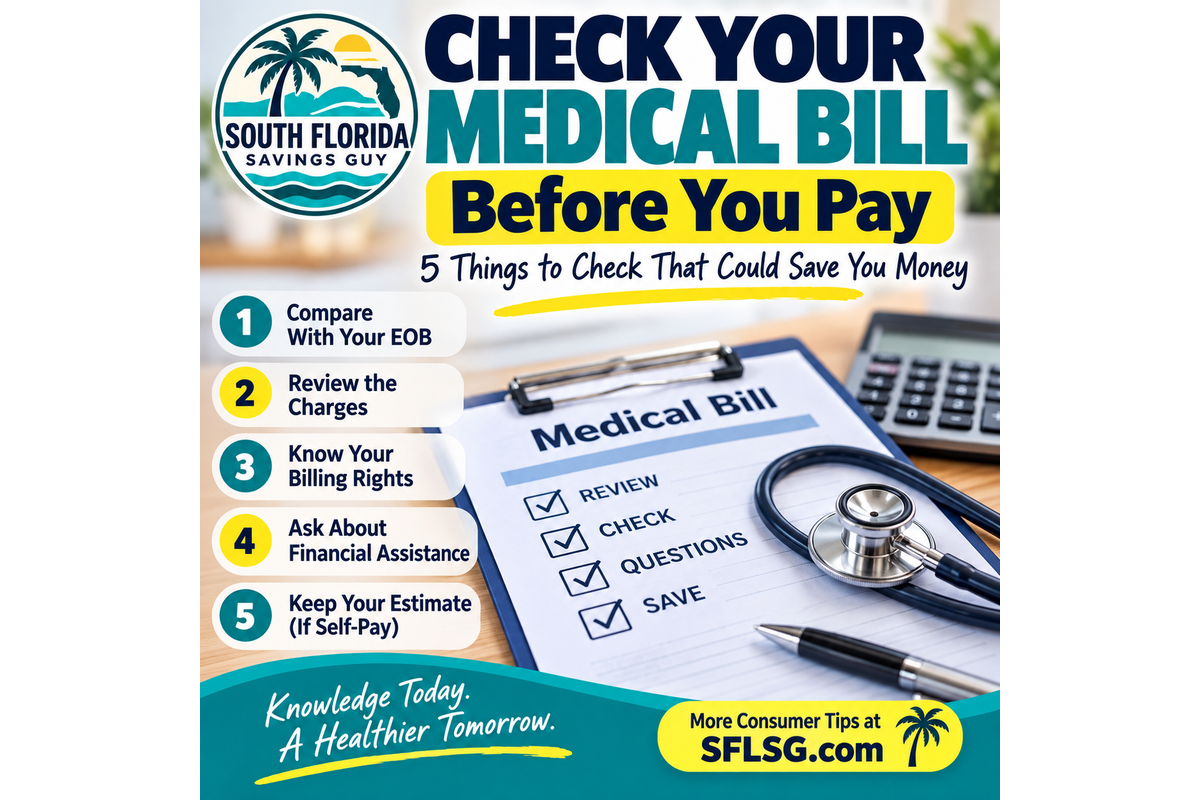
1. Compare the Bill With Your EOB
If you used health insurance, compare the bill with your Explanation of Benefits (EOB). Make sure the services, dates and amount the provider says you owe match what your insurance company reports. I always do this! Create a file folder for EOB’s and for your medical invoices. Place them in chronological date order from the oldest in the back to the newest in the front. When you receive both for the same service date and the same service provider, you’ll be able to confirm if the medical provider is billing you the same in agreement with your insurance company. See below for more details about this.
Remember: An EOB explains how your insurance processed the claim—it is not itself a bill.
2. Review the Charges
Look carefully at what you were charged for. If something doesn’t look right, contact the provider’s billing department and ask for clarification or a more detailed bill.
Don’t assume an unfamiliar or questionable charge is automatically correct. You have to stay on top of things like this!
3. Know Your Surprise-Billing Rights
The federal No Surprises Act protects many consumers from certain unexpected out-of-network medical bills, including qualifying emergency services and certain services received at in-network facilities.
Learn about your medical billing rights from CMS.
4. Ask About Financial Assistance
If you’re having difficulty paying a hospital bill, ask whether financial assistance is available. Tax-exempt hospitals are required to maintain financial assistance policies for eligible patients, and other providers may offer assistance or payment options as well.
Learn more about hospital financial assistance policies from the IRS.
5. If You’re Paying Without Insurance, Keep Your Estimate
If you don’t have insurance or aren’t using insurance, you may be entitled to a good faith estimate before qualifying scheduled care. Keep it and compare it with your final bill.
Under certain circumstances, if a provider’s bill is at least $400 higher than its good faith estimate, you may qualify for the federal patient-provider dispute resolution process.
Review the CMS medical-bill dispute requirements.
South Florida Savings Guy Recommendation
Don’t automatically assume a medical bill is wrong, but don’t assume it’s correct without reviewing it either.
Compare your paperwork, ask questions when something doesn’t make sense and find out whether billing protections or financial assistance apply to your situation.
This article provides general consumer information and is not medical, legal, insurance or financial advice. Rules and individual circumstances can vary.










 Click here for your Amazon deals!